
How methanol fuel cells are solving the off-grid CCTV challenge
Off-grid CCTV surveillance is crucial for the construction sector, helping to maintain security and lower insurance premiums. With infrastructure and housebuilding touted to increase across the UK, Dr Lee Juby, CEO at Fuel Cell Systems, explains how methanol fuel cells can help CCTV and security providers with reliable power.
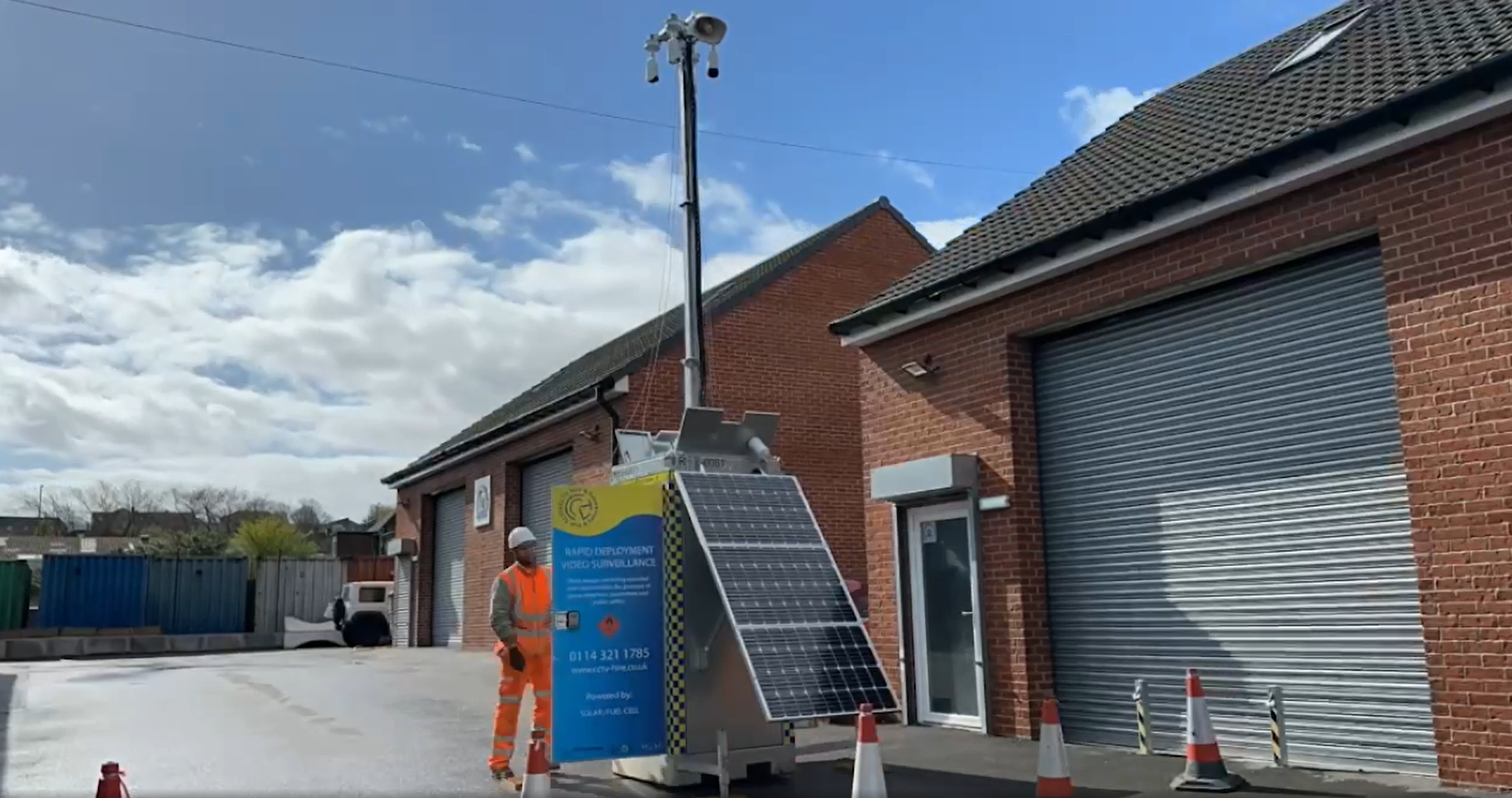
There is a growing need for rapid deployment, remote CCTV monitoring equipment in the UK, especially at construction, new infrastructure and similar temporary sites. Site theft costs the UK construction industry over £800 million annually. These costs come from replacing stolen machinery, project delays, increased insurance premiums, and more.
With the UK government aiming to build 1.5 million new homes by 2030, it’s more than possible that such figures could grow in proportion with house building. Likewise, the government’s 10 Year Infrastructure Strategy will promote more construction for new hospitals, schools, major rail upgrades and clean energy sites, all of which will also require surveillance.
The fundamental challenge of these locations is maintaining 24/7 surveillance either without a grid connection or without a stable electrical system to allow its use. For CCTV surveillance to work, there needs to be a solution.
Constrained by location and weather
Remote and temporary CCTV surveillance installations require continuous, reliable power for electrical equipment, including cameras, transmission, and other technology such as two-way audio. At remote locations, solar or micro-wind generation can supply power. But in the UK, the weather is frankly too patchy for this type of generation to provide reliable power. Lithium-ion batteries can be added as backup, but limited daylight and seasonal differences can quickly drain a battery, causing CCTV systems to cut out and stop recording.
Diesel generators are increasingly problematic because they can require frequent maintenance, alongside being noisy and polluting. Construction is under more pressure than ever to decarbonise, and replacing smaller generation assets with renewable alternatives is seen as low-hanging fruit compared to addressing embodied emissions, for instance.
Security companies and CCTV providers are therefore under pressure to find alternative solutions that can deliver the reliability and reassurance their customers need.
The methanol fuel cell for CCTV surveillance
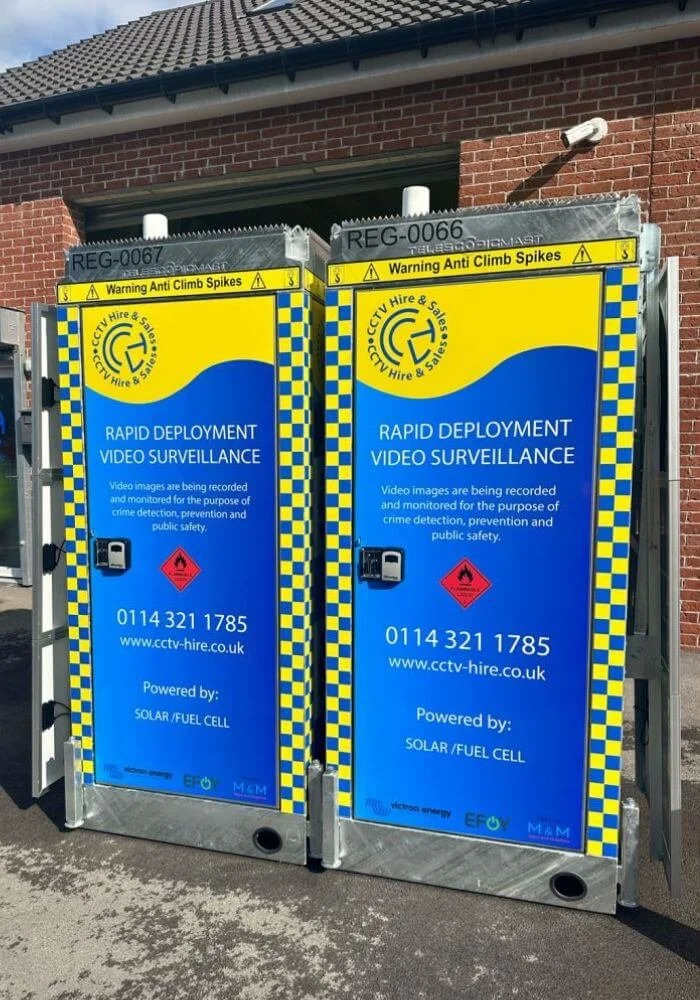
CCTV Hire & Sales is a UK-based builder and supplier of premium rapid deployment CCTV towers for remote and temporary sites, including construction, new infrastructure and more. It has a 30-year pedigree in the industry and is recognised for its speed of delivery and customer and product support. Each of its towers comprises four HD and thermal cameras, recording equipment, 4G connectivity, routers and more.
These towers were previously powered by a hybrid solar panel and hydrogen fuel cell system. But to provide customers with the reliability and 99% uptime that they expect, CCTV Hire & Sales’s team had to visit the sites to refuel the towers every two to four weeks. This was time-consuming, expensive, and increased the amount of time employees had to spend working in potentially hazardous environments.
To bypass these problems, CCTV Hire & Sales worked with Fuel Cell Systems to create a new hybrid power solution for its CCTV surveillance towers. The business used solar panels, lithium-ion batteries, and methanol fuel cells for continuous power. An EFOY Pro 1800 Fuel Cell, running on methanol, is installed inside each tower, and kicks in when the system’s battery voltage drops below a set threshold, ensuring uninterrupted power by charging the batteries.
Switching to methanol fuel cells instead of hydrogen has extended the towers’ service intervals from a couple of weeks to a minimum of three months. In addition, the solution includes remote monitoring of fuel levels and system status via the EFOY Cloud platform. CCTV Hire & Sales’ team receives real-time updates that let it plan trips efficiently, avoiding unnecessary or impractical site visits in favour of scheduled and route-optimised ones that make the most of the team’s time and resources.
Alex Clarke, production manager at CCTV Hire & Sales, said: “Fuel Cells give us a reliable source of power that we trust in, giving customers constant security that never fails due to power.”
The benefits of methanol fuel cells
As the CCTV Hire & Sales case shows, methanol fuel cells have several benefits that make them ideal for CCTV surveillance. They have up to six months of self-sufficient operation at the right capacity, and remote monitoring prevents unexpected downtime while allowing for optimised refuelling schedules.
A guaranteed power supply helps maintain security coverage without gaps, giving customers confidence in the reliability of their CCTV and the security of their sites. Moreover, construction businesses needn’t be concerned about their low-emissions targets or local pollution requirements, because methanol fuel cells are virtually emissions-free and silent.
Methanol fuel cells are constructed with very few moving parts, too, especially compared to a generator. This makes them reliable and further reduces the need for security companies to make site visits. Ultimately, this translates to a reduction in the total cost of ownership for a remote CCTV surveillance system.
Keeping pace with growing demand
While renewable-only systems fall short of the operational needs for remote CCTV surveillance, methanol fuel cells have shown themselves to be a reliable solution for remote power. Their simple and effective technology addresses the unique challenges of weather, location and reliability, without placing undue operational burden on security and CCTV systems providers. The combination of autonomy, reliability, and remote monitoring provides a clear return for security and CCTV systems providers, along with assurance for end customers.