
Hydrogen Refuelling for Low-Emission Ground Operations
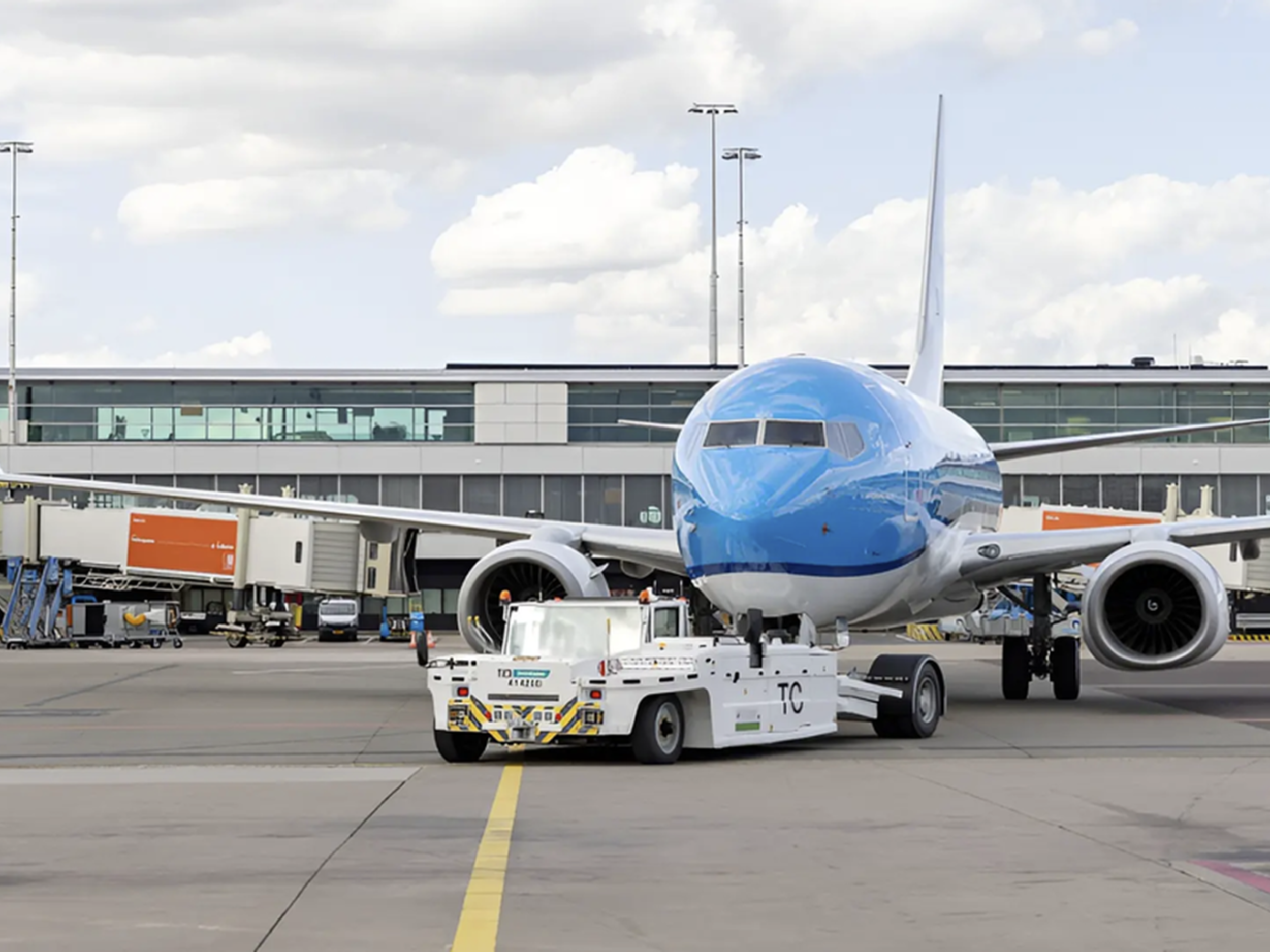
Schiphol Airport
Amsterdam Airport Schiphol is the Netherlands’ main international airport and one of Europe’s busiest aviation hubs, serving 68.7 million passengers in 2025. Schiphol is working towards zero emission ground operations by 2030. While battery electric equipment is already used across much of the airport, hydrogen offers a complementary option for vehicles requiring rapid refuelling, high availability and dependable operation across long or intensive shifts.
The Project
As part of the EU-backed TULIPS Green Airports programme, Schiphol carried out a live operational trial of hydrogen powered ground vehicles. The pilot assessed three applications: heavy duty aircraft towing, a hydrogen ground power unit and airside vehicles for duties such as Bird Control.
The project explored how hydrogen could work within day to day airport activity, including refuelling logistics, vehicle reliability, range and integration into established airside safety procedures.
The main focus was a specially developed hydrogen powered aircraft tow vehicle, designed to handle large aircraft without tailpipe emissions. It was used to move Boeing 737 aircraft between parking areas, hangars, taxiways and gates.
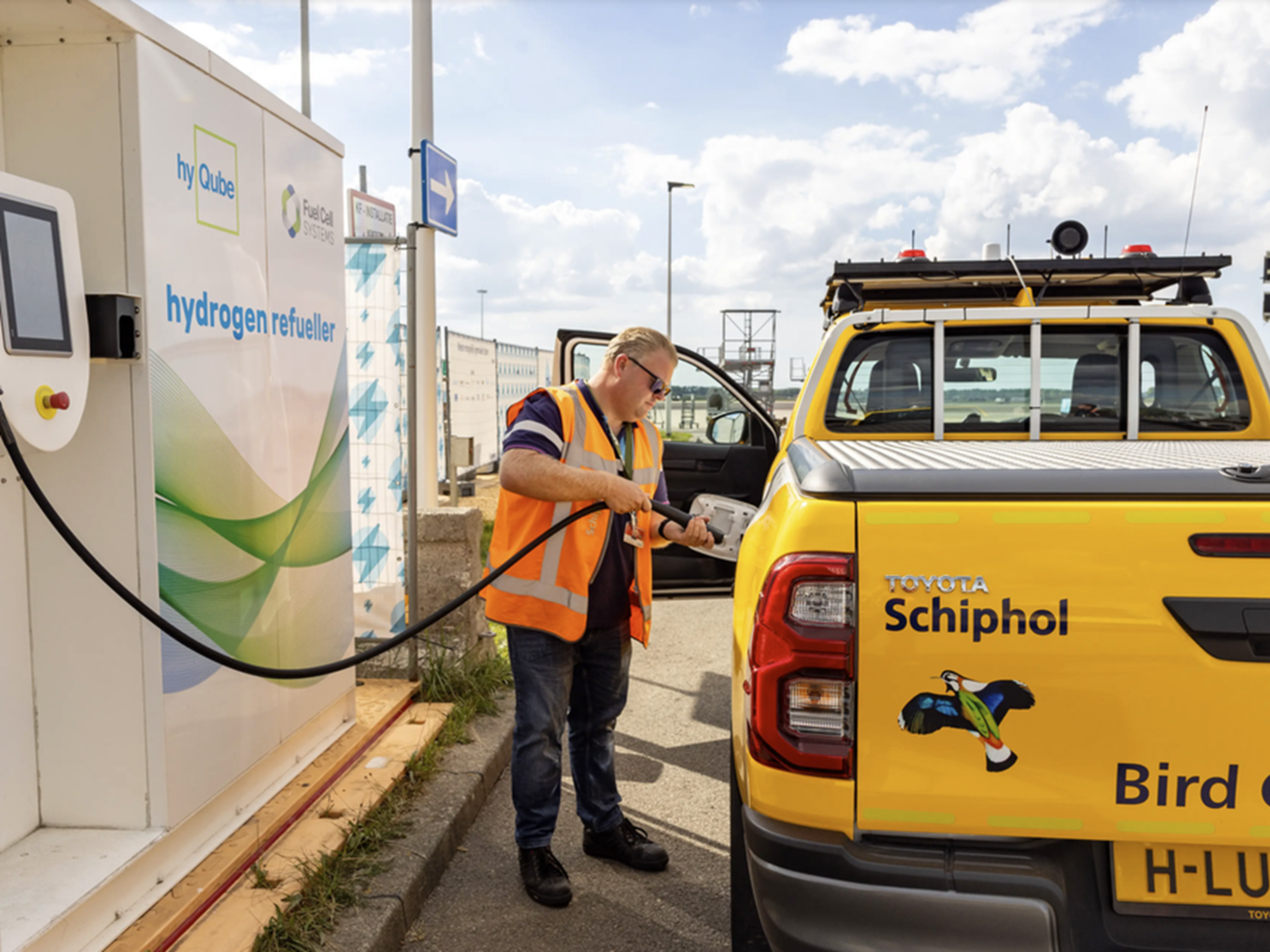
The hydrogen GPU was intended to provide power to parked aircraft where fixed electrical infrastructure was not available. Hydrogen fuel cell Toyota Hilux pick up trucks were also used by Schiphol’s Bird Control team, where vehicles must remain available and operate reliably in wet, muddy or snowy conditions.
The Refuelling Solution
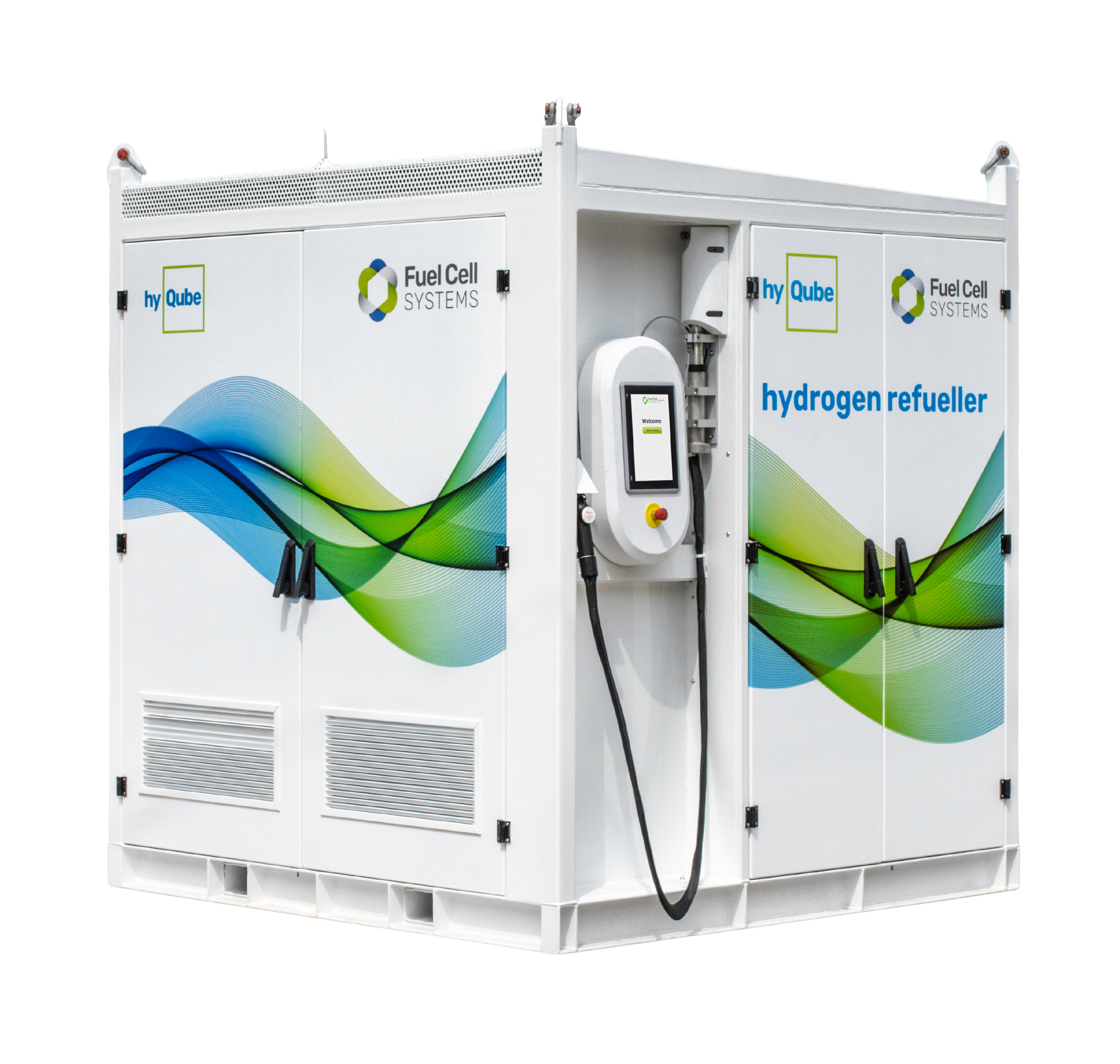
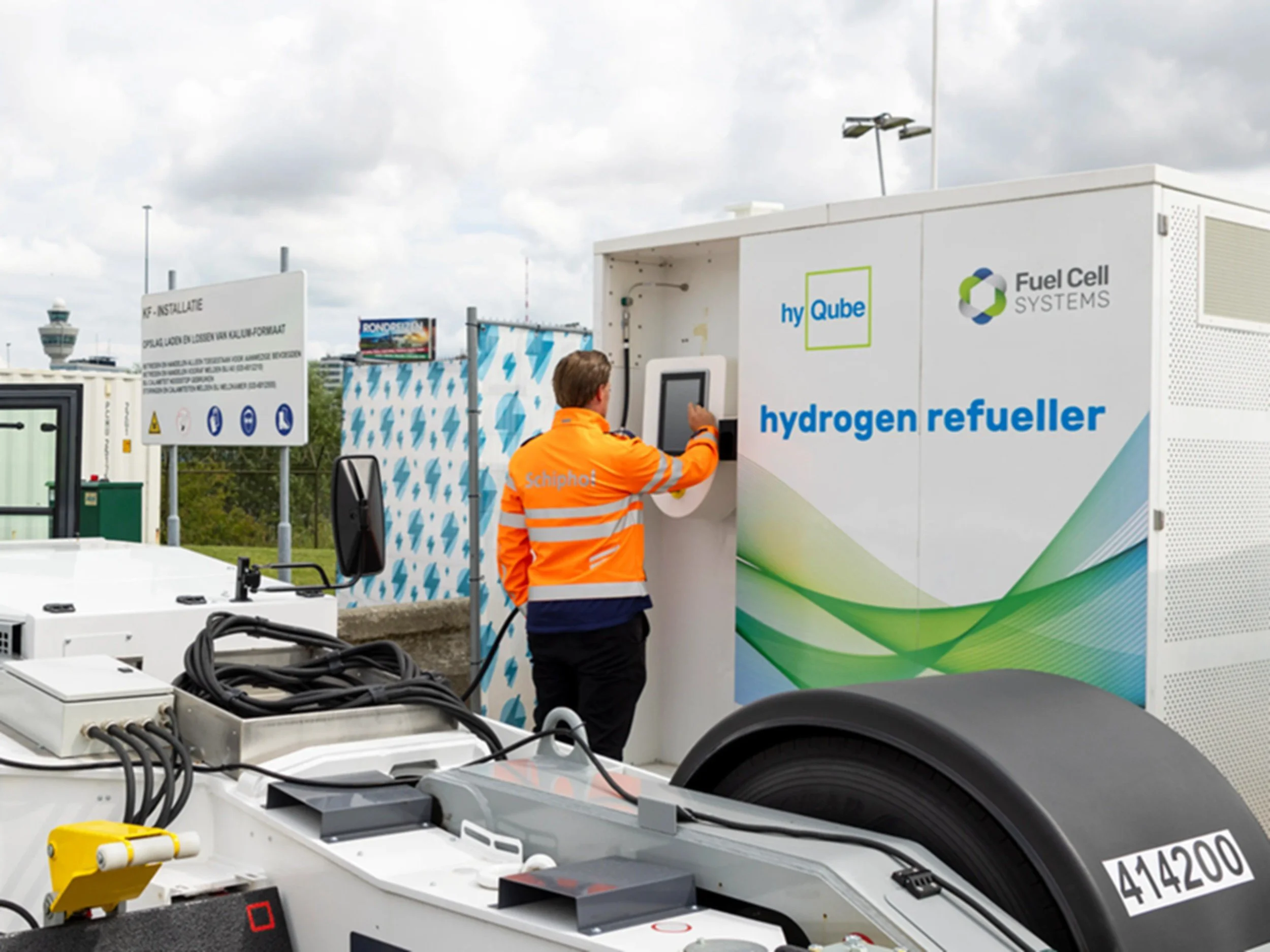
Fuel Cell Systems supplied a HyQube 500 modular hydrogen refueller on a rental basis for the trial period, while Linde provided the hydrogen gas. Hydrogen was delivered by tube trailer.
The HyQube compressed it into storage cylinder bundles before dispensing it at 350 bar to refuel the hydrogen powered aircraft tow vehicle and Toyota Hilux vehicles.
FCS delivered and commissioned the system, trained Schiphol’s team in safe operation and provided technical support throughout the trial. The HyQube’s redeployable format avoided the construction programme, long lead times and upfront investment associated with a permanent refuelling station, helping the airport gather practical operational data before considering the next stage of deployment.
Why Hydrogen?
Schiphol identified advantages of hydrogen for demanding airside vehicles:
- More stable performance in hot and cold conditions
- Fast refuelling in minutes rather than extended charging periods.
- Reduced need for charging infrastructure and parking space.
- A practical option for intensive work where vehicles must be available.
“We found Fuel Cell Systems to be a knowledgeable and dependable partner throughout the trial, and we appreciate their contribution to the advancement of hydrogen solutions for aviation ground operations.”
Cees de Haan, Head of Asset Management, Schiphol
What it Enabled
The trial gave Schiphol the opportunity to assess hydrogen refuelling in real world airport conditions, where vehicles must respond quickly, operate across multiple shifts and fit within tightly managed turnaround and airside safety procedures.
The HyQube 500 operated safely and consistently throughout the programme, supporting operational testing and providing insight into the practical requirements of hydrogen use at a major international airport.
The project contributed to Schiphol’s wider sustainability objectives, demonstrating how modular hydrogen infrastructure can support a phased route from pilot projects towards more permanent hydrogen ground operations.