What is Hydrogen Refuelling?
Hydrogen refuelling is one of the key technologies supporting the transition to lower-carbon transport. While many people are familiar with charging battery electric vehicles, hydrogen refuelling remains less widely understood.
Hydrogen fuel cell electric vehicles (FCEVs) are increasingly being adopted for applications such as buses, heavy goods vehicles (HGVs), rail, construction equipment and airport ground support equipment, where long travel distances, rapid refuelling and extended periods of operation are often required.
Unlike petrol or diesel, hydrogen is not a primary fuel that can simply be extracted and used. It must first be produced before being compressed and stored ready to dispense into a fuel cell vehicle.
Once inside the vehicle, hydrogen is converted into electricity by a fuel cell, which powers an electric motor. The only exhaust pipe emission from the vehicle is water vapour.
In this guide, we'll explain each stage of the hydrogen refuelling process and answer some of the most common questions about how hydrogen-powered vehicles work.
HYDROGEN PRODUCTION
Where Does Hydrogen Come From?
Although hydrogen is the most abundant element in the universe, it is rarely found in its pure form on Earth. Instead, it is chemically bonded within compounds such as water (H₂O) and hydrocarbons, so it must first be separated before it can be used as a fuel. There are several ways to produce hydrogen, each with different carbon emissions:
Green Hydrogen
An electrolyser uses electricity to split purified water (H₂O) into hydrogen (H₂) and oxygen (O₂). When powered by renewable electricity, such as wind or solar energy, electrolysis produces very low carbon emissions. The oxygen produced is typically released safely into the atmosphere or captured for industrial use.
Blue Hydrogen
Blue hydrogen is produced from natural gas using processes such as steam methane reforming (SMR) or autothermal reforming (ATR). The carbon dioxide (CO₂) generated during production is captured and stored using Carbon Capture and Storage (CCS) technologies, reducing overall emissions.
Grey Hydrogen
Grey hydrogen is produced using similar methods to blue hydrogen, but without carbon capture. As a result, the carbon dioxide produced during the process is released into the atmosphere, giving grey hydrogen a significantly higher carbon footprint.
As renewable electricity generation continues to expand across the UK and Europe, green hydrogen is expected to play an increasingly important role in decarbonising transport and industry.
HYDROGEN DELIVERY
How Does Hydrogen Reach a Refuelling Station?
Once hydrogen has been produced, it must be supplied to the refuelling station. The method used depends on the location, available infrastructure and the scale of hydrogen demand:
On-site Production
Some refuelling stations produce hydrogen on-site using an electrolyser, removing the need for road transport. Hydrogen typically leaves the electrolyser at around 30–40 bar before being compressed for storage and dispensing.
Tube Trailer Delivery
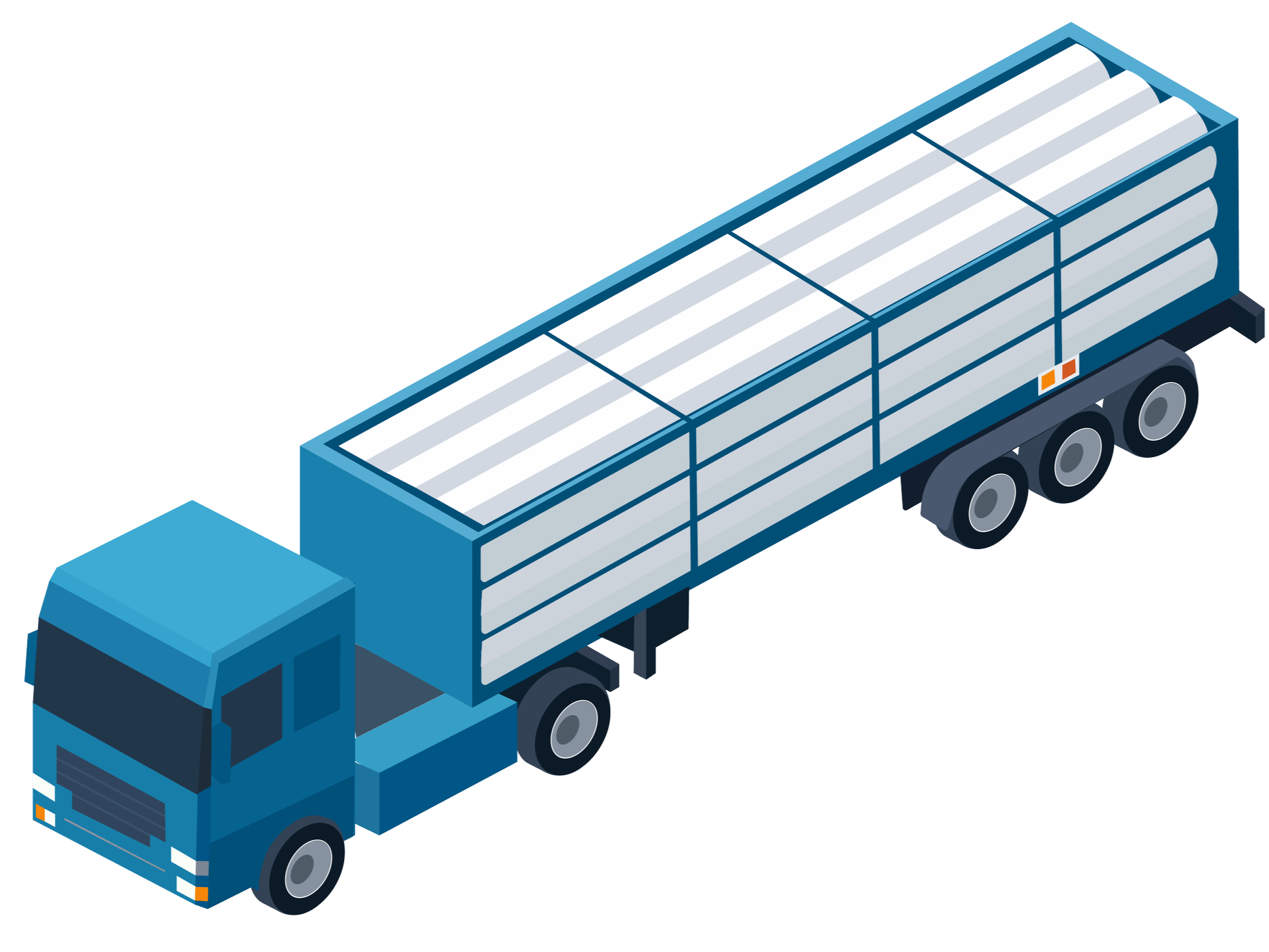
Hydrogen can also be produced at a central facility and transported to the refuelling station by high-pressure tube trailer. It is typically delivered at pressures of around 200–500 bar, making this one of the most common supply methods.
Pipeline Supply
In some locations, hydrogen can be supplied through dedicated pipelines. Although pipeline networks are expected to expand, they are currently less common than on-site production or tube trailer delivery. As pipeline pressures vary, additional compression is often required.
HYDROGEN STORAGE
Why Does Hydrogen Need to Be Compressed and Stored?
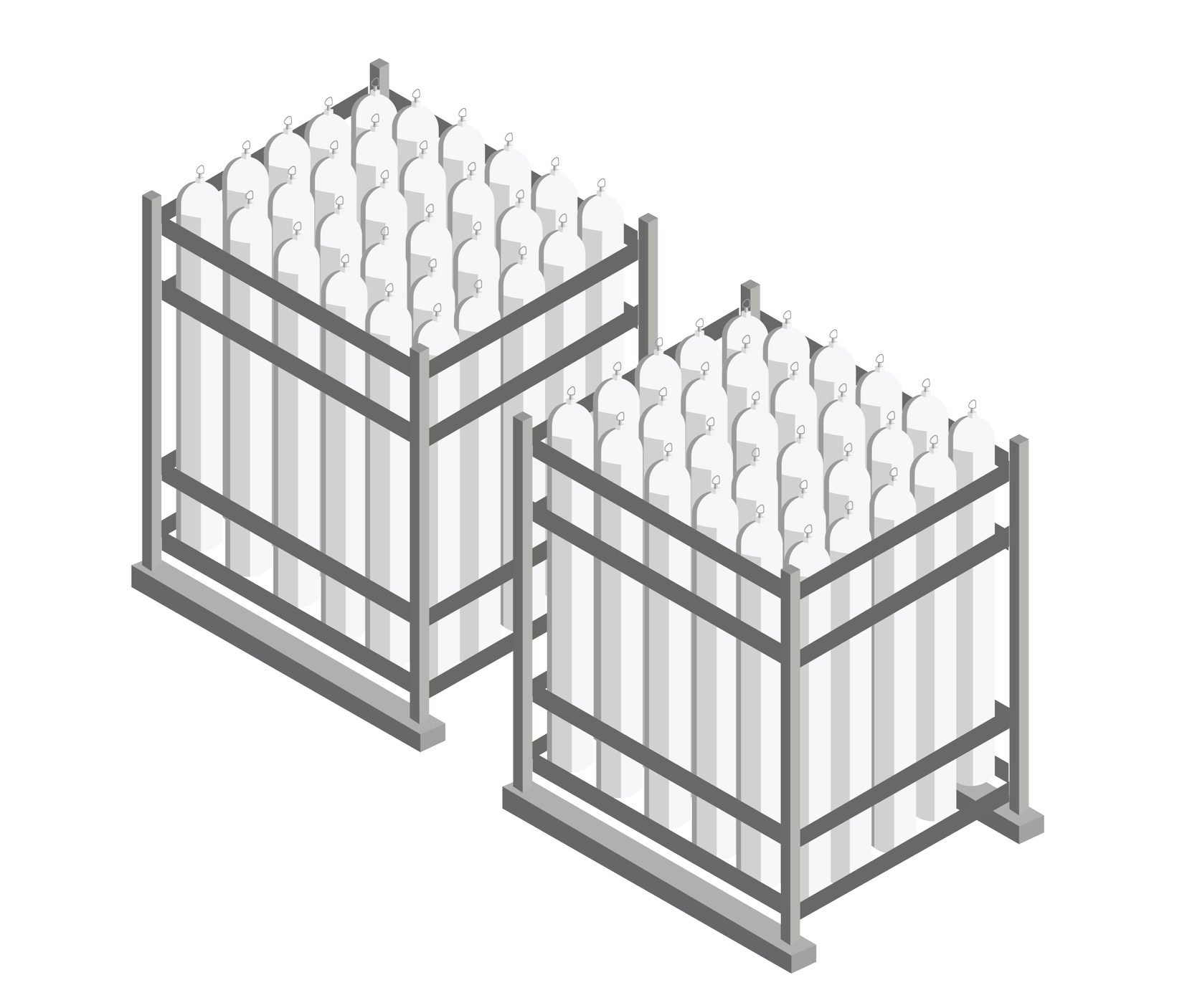
Hydrogen arriving at a refuelling station is not usually at the pressure required for vehicle refuelling. Before it can be dispensed, it is compressed and stored in high-pressure vessels.
Most hydrogen refuelling stations dispense hydrogen at either:
- 350 bar
- 700 bar
A hydrogen compressor increases the pressure of the gas, reducing its volume so it can be stored more efficiently. As the gas is compressed, it becomes hotter, so it passes through a heat exchanger to remove excess heat before entering the station's high-pressure storage vessels.
Compressing hydrogen increases its density, allowing more hydrogen to be stored within a given tank volume. Storing compressed hydrogen in advance enables the station to dispense fuel immediately when a vehicle arrives, providing fast and efficient refuelling.
Hydrogen can be used to fuel a range of vehicles, including passenger cars, buses, trucks and other commercial or heavy-duty vehicles. The required refuelling pressure depends on the vehicle and its onboard hydrogen storage system.
HYDROGEN REFUELLING
How is Hydrogen Dispensed?
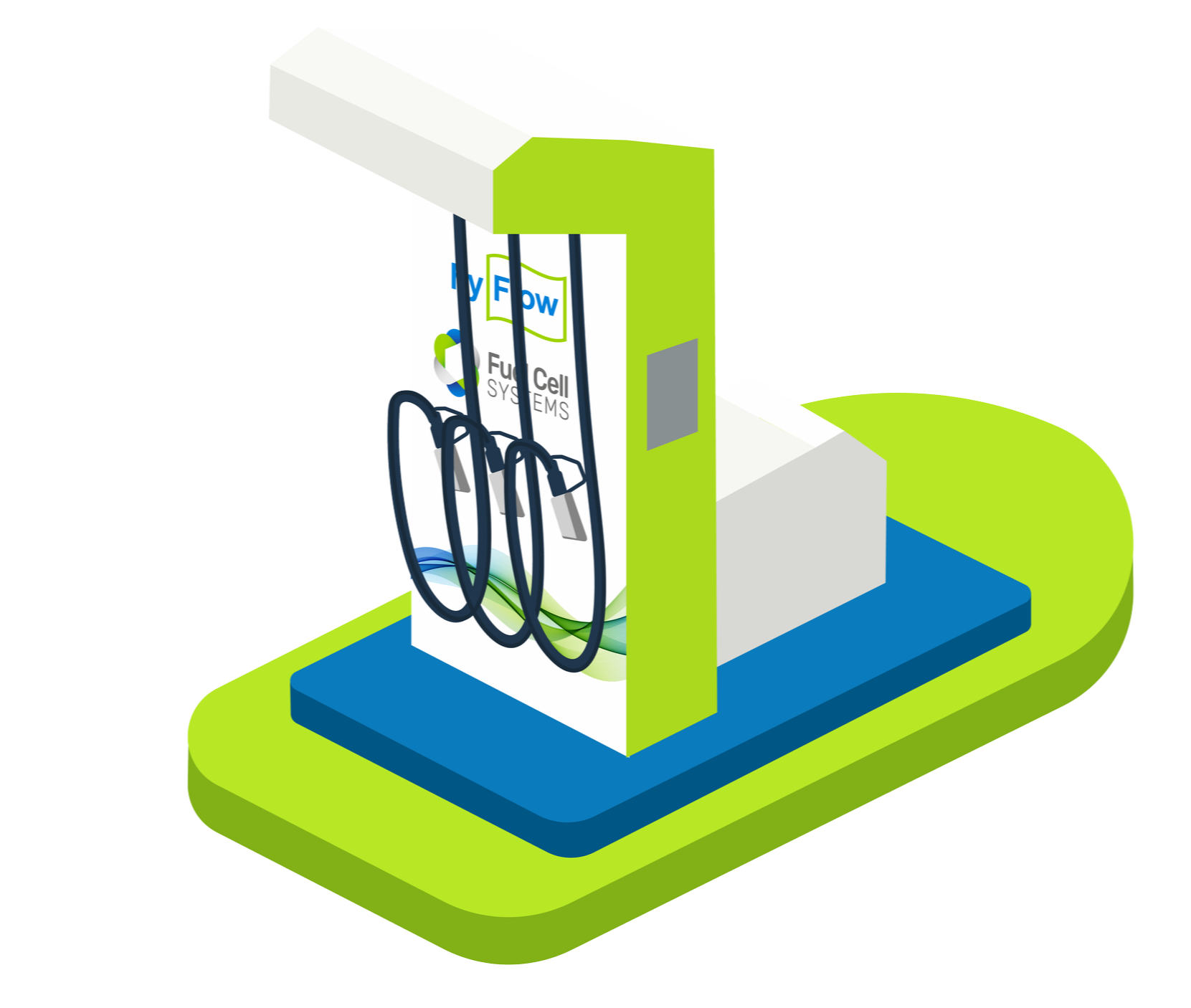
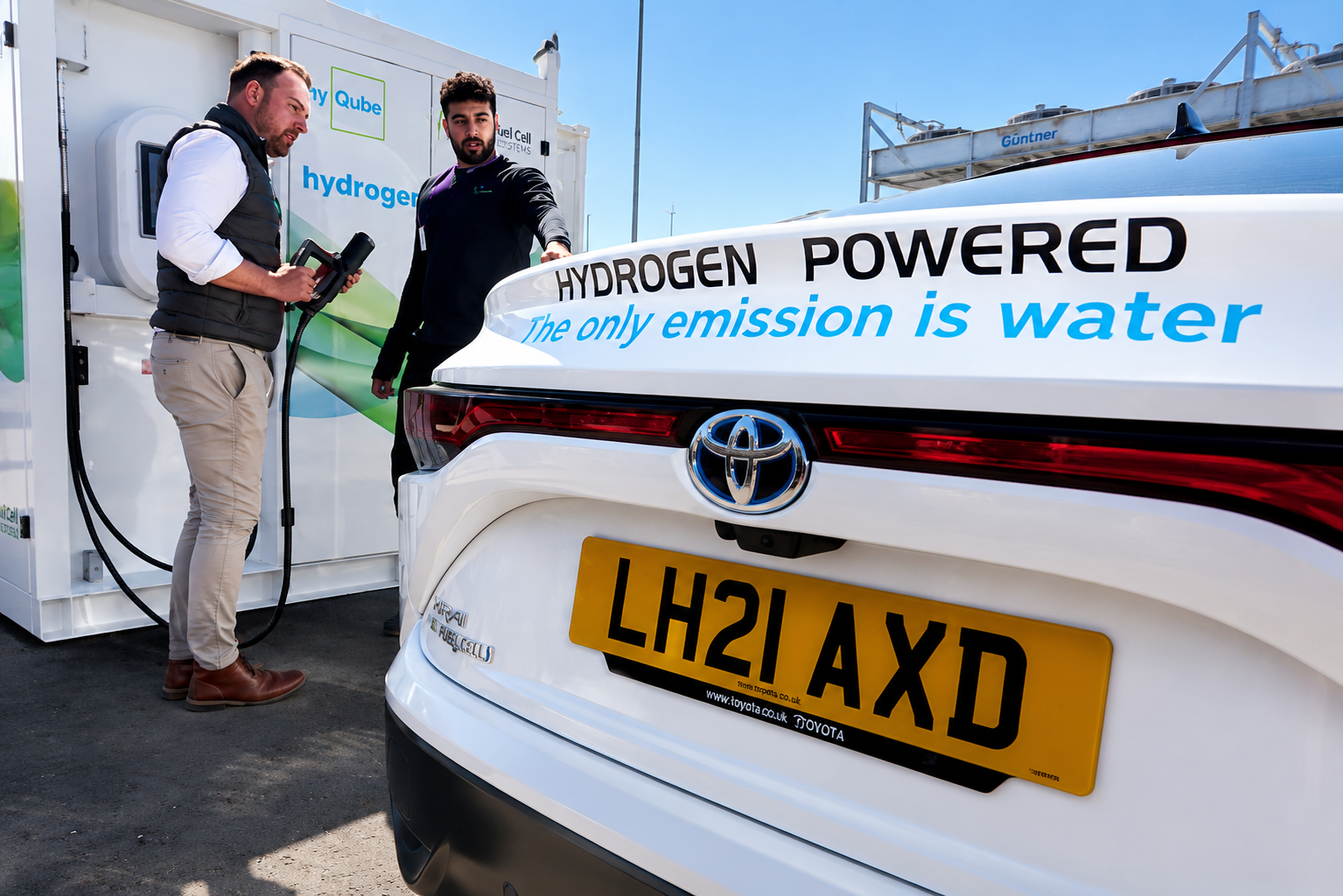
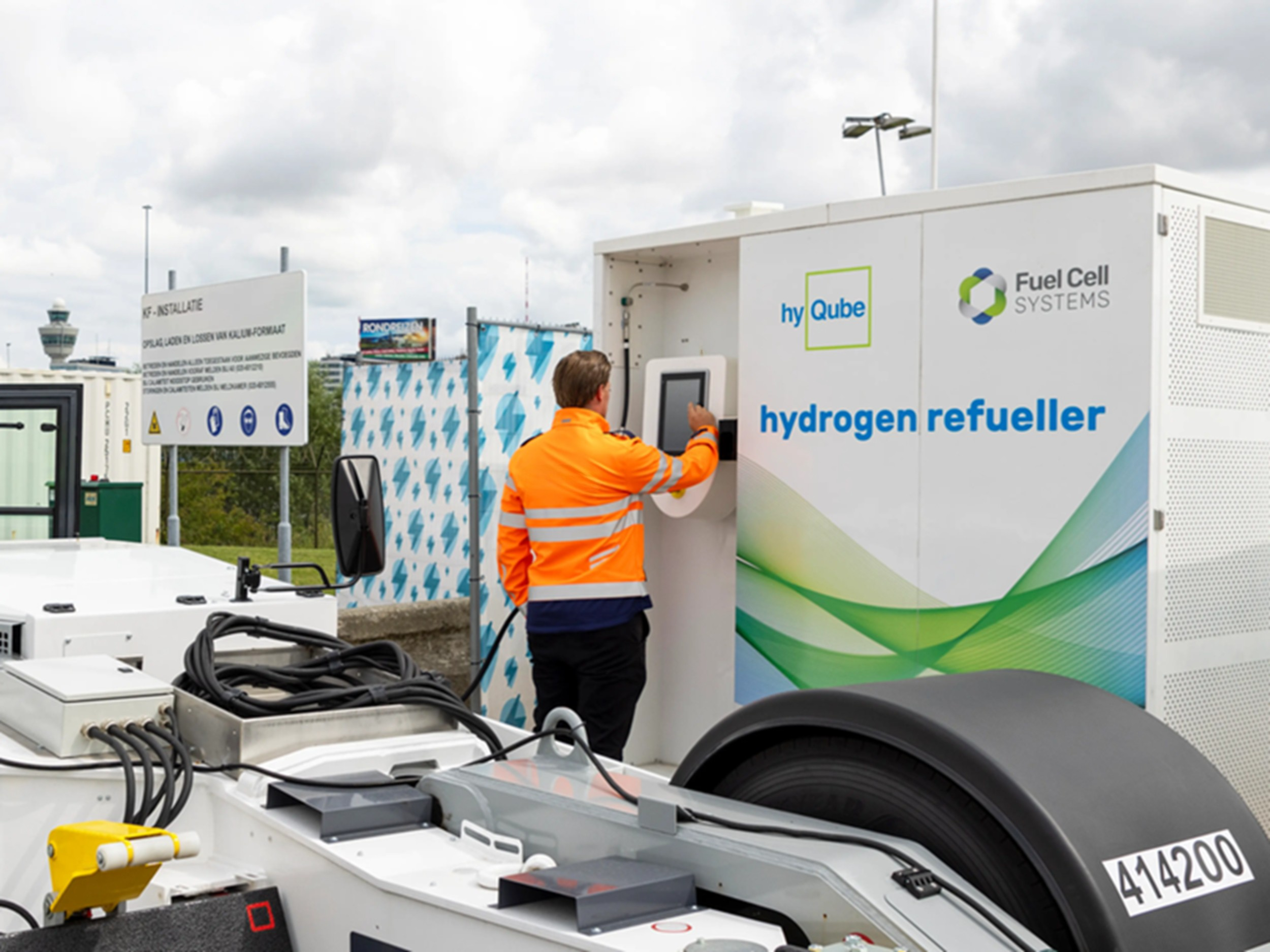
Once hydrogen has been compressed and stored, it is ready to be dispensed into a vehicle. Refuelling a hydrogen vehicle is designed to be similar to refuelling a petrol or diesel vehicle. The driver connects the dispenser nozzle to the vehicle's hydrogen receptacle, and the hydrogen refuelling station performs a series of automatic safety and communication checks before dispensing begins.
Once the connection has been verified, compressed hydrogen flows from the station's high-pressure storage vessels into the vehicle's onboard tanks. Throughout the refuelling process, the dispenser continuously monitors and controls the pressure, temperature and flow rate to ensure safe, accurate and efficient filling.
Some hydrogen refuelling stations include a pre-cooling system that cools the hydrogen before dispensing. During rapid filling, hydrogen heats up as it is compressed inside the vehicle's tanks. Pre-cooling helps manage this temperature rise, enabling faster refuelling while complying with recognised protocols such as SAE J2601.
However, not every hydrogen refuelling application requires pre-cooling. Systems designed for lower dispensing rates or specific vehicle applications can safely refuel without a dedicated pre-cooling system. Eliminating pre-cooling reduces equipment complexity, energy consumption and installation costs, making these systems more cost-effective to install and operate.
Once the required fill level has been reached, the dispenser automatically stops the flow of hydrogen. The nozzle can then be disconnected, ready for the next vehicle
HYDROGEN FUEL CELL
How Does a Hydrogen Fuel Cell Electric Vehicle Work?
Once hydrogen has been stored onboard, it is ready to power the vehicle. Like a battery electric vehicle (BEV), a hydrogen fuel cell electric vehicle (FCEV) uses a battery and electric motor. However, an FCEV generates most of its electricity onboard using a fuel cell. A smaller battery works alongside the fuel cell, storing energy recovered through regenerative braking and providing additional power when required.
Hydrogen flows from the onboard storage tanks into the fuel cell stack.

Oxygen is drawn from the surrounding air.

Inside the fuel cell, hydrogen reacts electrochemically with oxygen to generate electricity.

The electricity powers the electric motor, driving the vehicle.
The battery stores recovered energy and provides additional power when needed.

Heat and water are produced as by-products, with water being the only exhaust emission.
By generating electricity on demand, hydrogen fuel cell electric vehicles combine fast refuelling, long driving ranges and smaller, lighter battery packs, making them well suited to applications where battery electric vehicles may not be practical.
DECARBONISING TRANSPORT
How Is Hydrogen Refuelling the Future?
Hydrogen refuelling is already supporting the transition to lower-carbon transport across a growing range of applications. What was once an emerging technology is now powering passenger cars, vans, buses, heavy goods vehicles, trains, construction equipment and airport ground support equipment around the world.
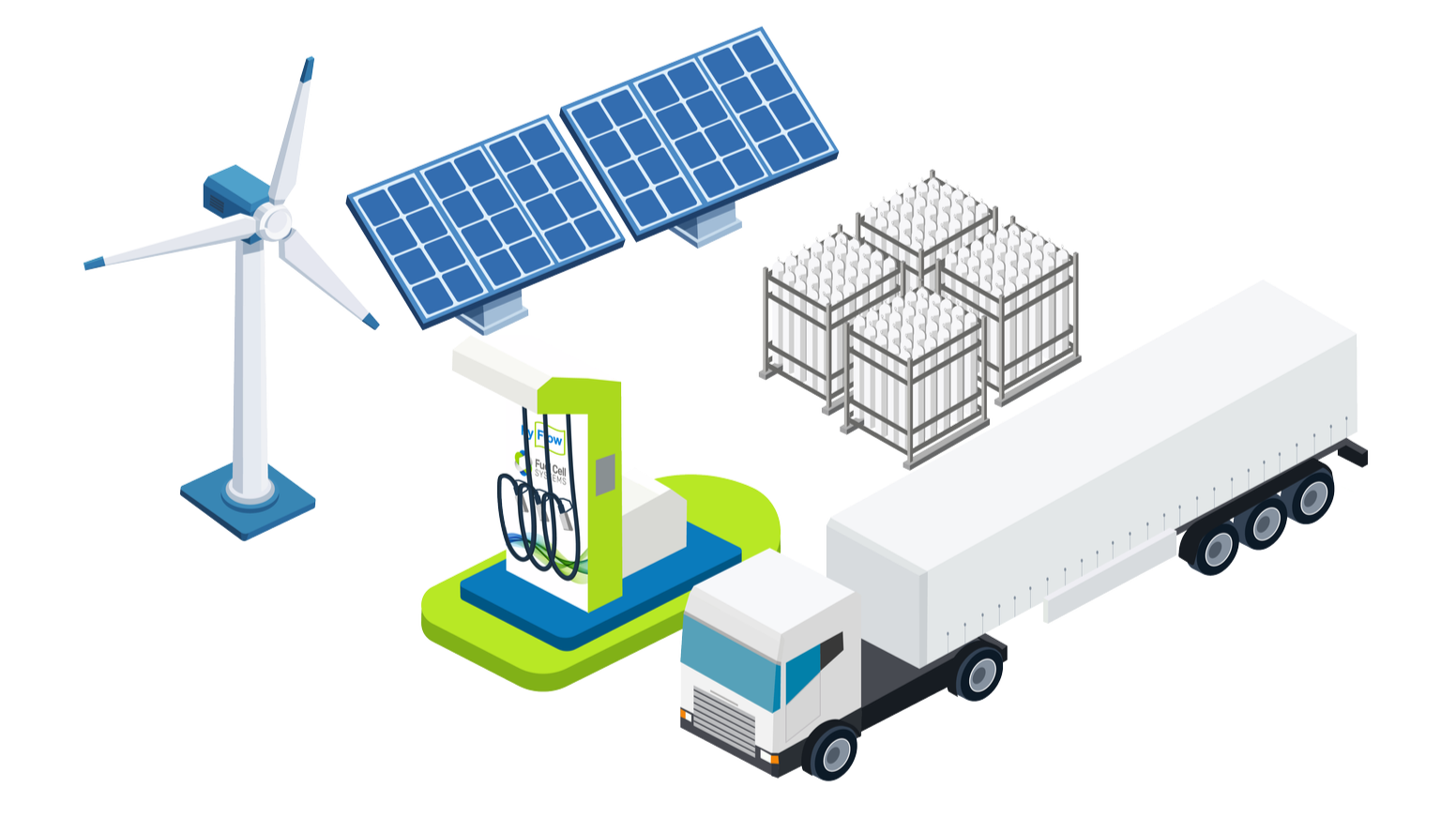
Hydrogen refuelling is more than the technology inside a filling station. It is part of a wider energy ecosystem that connects renewable electricity, hydrogen production, refuelling infrastructure and fuel cell technology to deliver zero exhaust emission electric transport.
As hydrogen production and refuelling infrastructure continue to expand, hydrogen is expected to play an increasingly important role alongside battery electric vehicles. Together, these technologies will help decarbonise transport by providing practical solutions for both everyday road vehicles and commercial applications.