
Continuous Water Quality Monitoring (CWQM) Kiosk Trial
Wessex Water
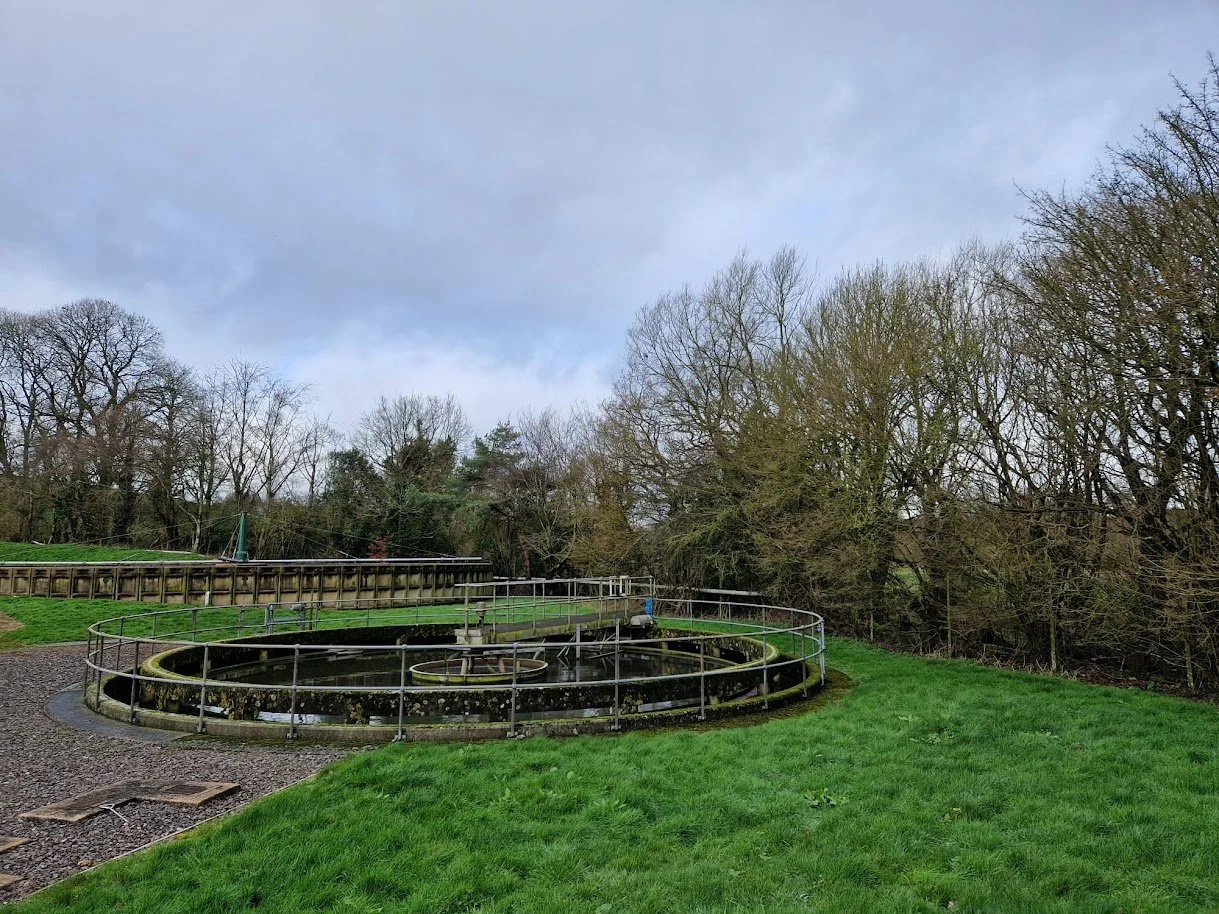
Wessex Water is recognised by regulators as one of the leading water and sewerage companies in England and Wales, supplying services to over 2.9 million customers across the South West of England. As part of its commitment to improving river health, the company is trialling continuous, high-resolution water quality monitoring technologies to provide more accurate and reliable environmental data.
Understanding the Need for Better Monitoring
As expectations around river health and transparency increase, the industry is moving towards continuous, high-resolution monitoring. This is a change from traditional methods as it provides a deeper understanding of what is happening within our rivers and waterways.
Historically, water quality assessment has relied on spot sampling. While useful for compliance checks, this approach has limitations. It provides only a snapshot rather than the full picture, meaning pollution events may be missed and, in some cases, the data can be misleading or unrepresentative of actual river conditions. Water quality can change rapidly due to rainfall, discharge activity, and upstream influences. As a result, infrequent sampling often fails to reflect the true state of a watercourse.
The Shift to High-Resolution Monitoring
High-resolution monitoring addresses challenges by capturing data at regular intervals. This monitoring is carried out at least every hour, increasing to every 15 minutes during high risk periods.
This enables:
Continuous visibility of water quality trends
Early detection of anomalies and pollution events
Data-driven decision making
Improved operational response and planning
Modern systems use multi-parameter sondes capable of measuring key indicators such as pH, temperature, conductivity, dissolved oxygen, turbidity, and ammonia. These sensors are typically deployed within kiosk-based monitoring systems, where water is pumped into a controlled environment. This approach improves measurement stability, reduces sensor wear, and ensures more reliable long-term data collection.
The Challenge of Powering Continuous Monitoring
Section 82 of the Environment Act 2021 requires water companies in the UK to introduce continuous water quality monitoring at sites where discharges enter watercourses. To assess the true impact of discharges, monitoring is typically carried out both upstream and downstream of each site. The programme is being rolled out in phases, prioritising higher risk locations, with full implementation expected by 2035 as part of wider efforts to improve river health and rebuild public trust.
Delivering this level of monitoring requires a large number of systems to be installed across diverse environments. Many of these locations are remote, environmentally sensitive, or lack access to grid electricity. While monitoring technology has advanced significantly, ensuring a reliable and continuous power supply in these conditions is a key practical challenge that must be addressed.
Why Power Matters More Than Ever
The Continuous Water Quality Monitoring (CWQM) kiosks draw water into a bankside unit, where sensors measure key water quality parameters in a controlled environment. Supporting high-resolution sampling at both hourly and 15 minute intervals requires additional equipment, including sampling pumps, multi-parameter sondes, telemetry and data logging systems, and internal environmental controls. While this approach protects equipment from harsh river conditions, it also creates a significantly higher power demand, making a dependable energy supply essential.
To enable high resolution monitoring, these systems must run continuously without interruption. Prolonged loss of power will lead to battery failure and can result in data gaps, reduced confidence in results, increased operational risk, and additional maintenance visits. Many monitoring locations do not have access to mains electricity, particularly in remote or environmentally sensitive areas. As a result, these systems must rely on off-grid power solutions.
Solar and battery only systems are commonly used but can be limited by weather, available space and often require ongoing intervention. Generators provide an alternative, but come with high servicing demands, emissions and particulates, noise, and inefficiencies for intermittent use.
Together, these challenges make it difficult to achieve reliable, continuous operation, highlighting the need for a more dependable off-grid power solution.
As part of a CWQM trial at a wastewater treatment site, Wessex Water installed a fuel cell, to power both the monitoring equipment and the sampling pump that draws water into the kiosk for analysis.
Wessex Water Deployment: Fuel Cell Solution
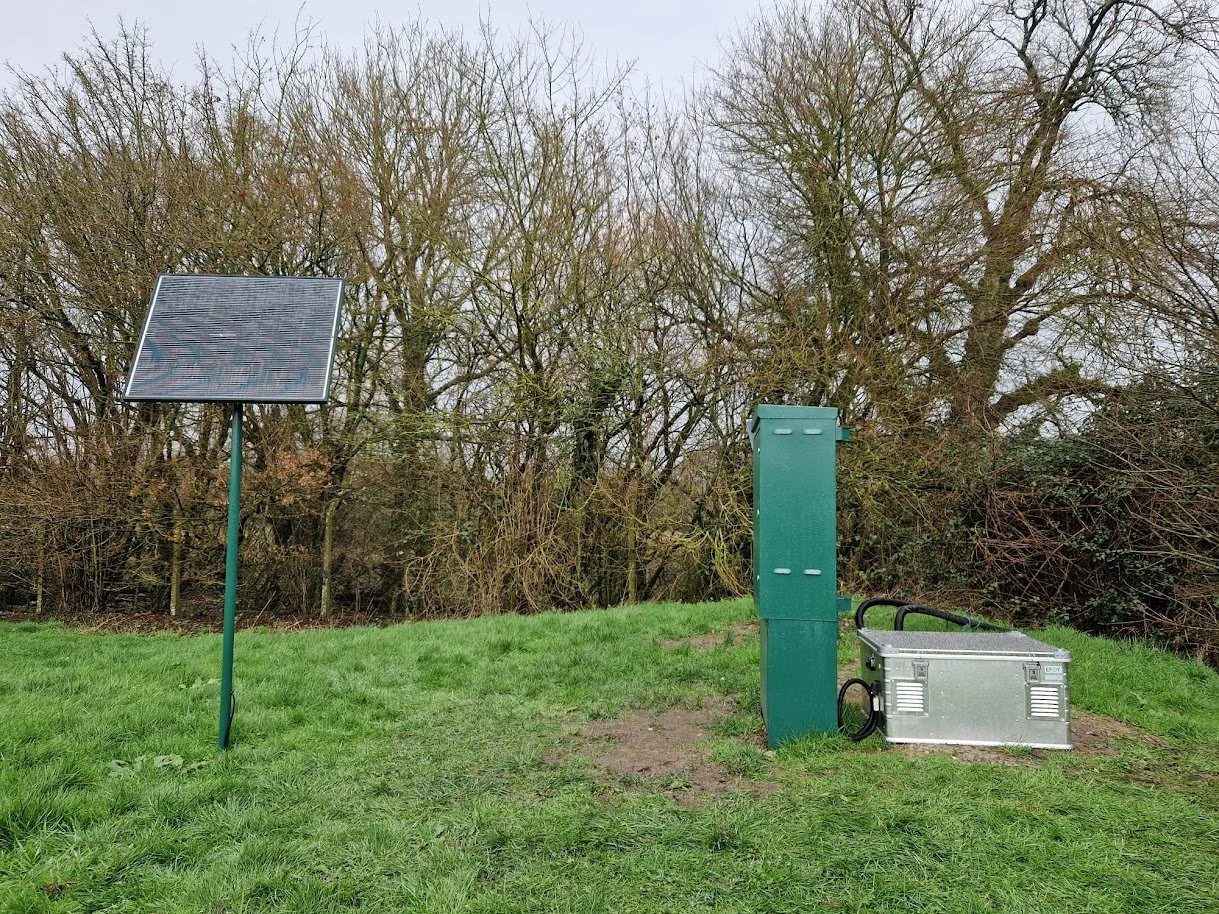
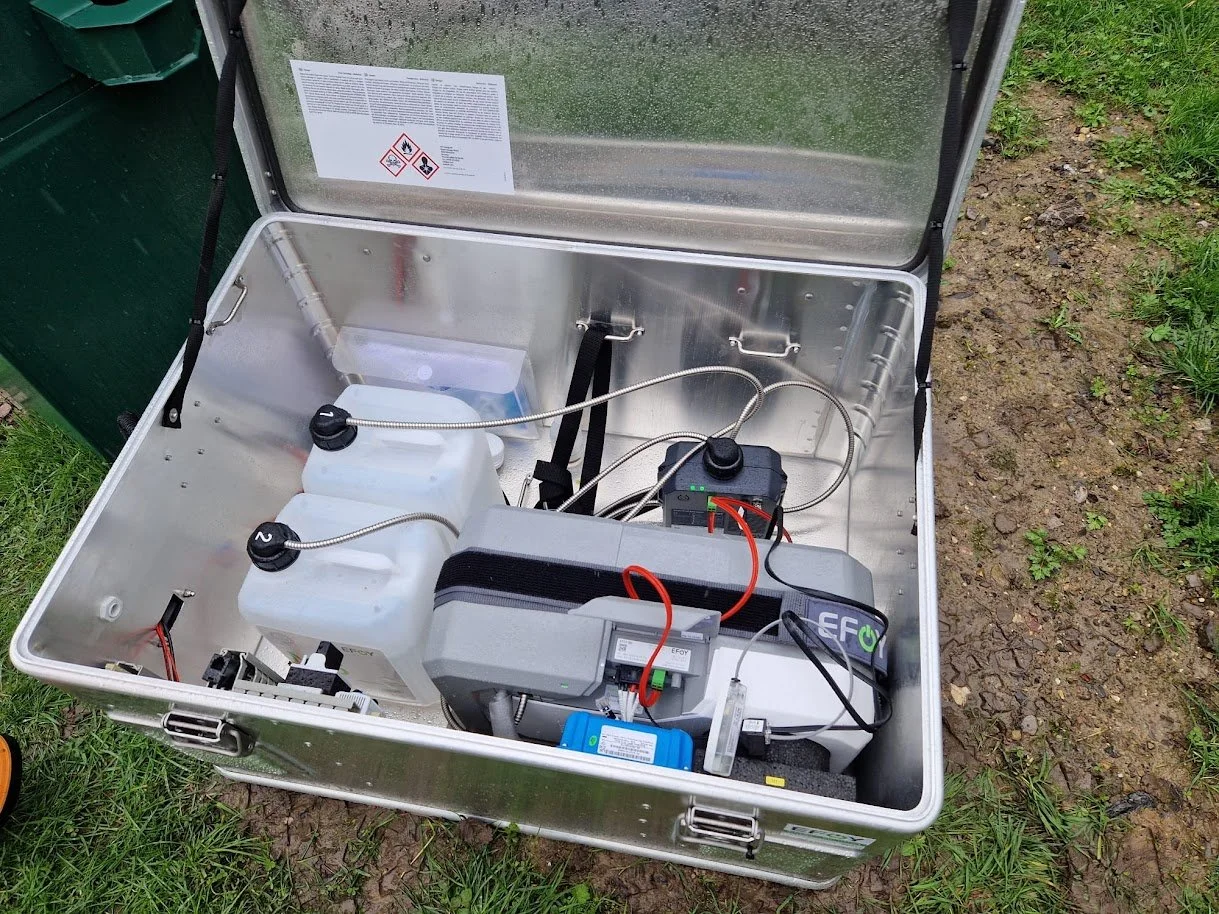
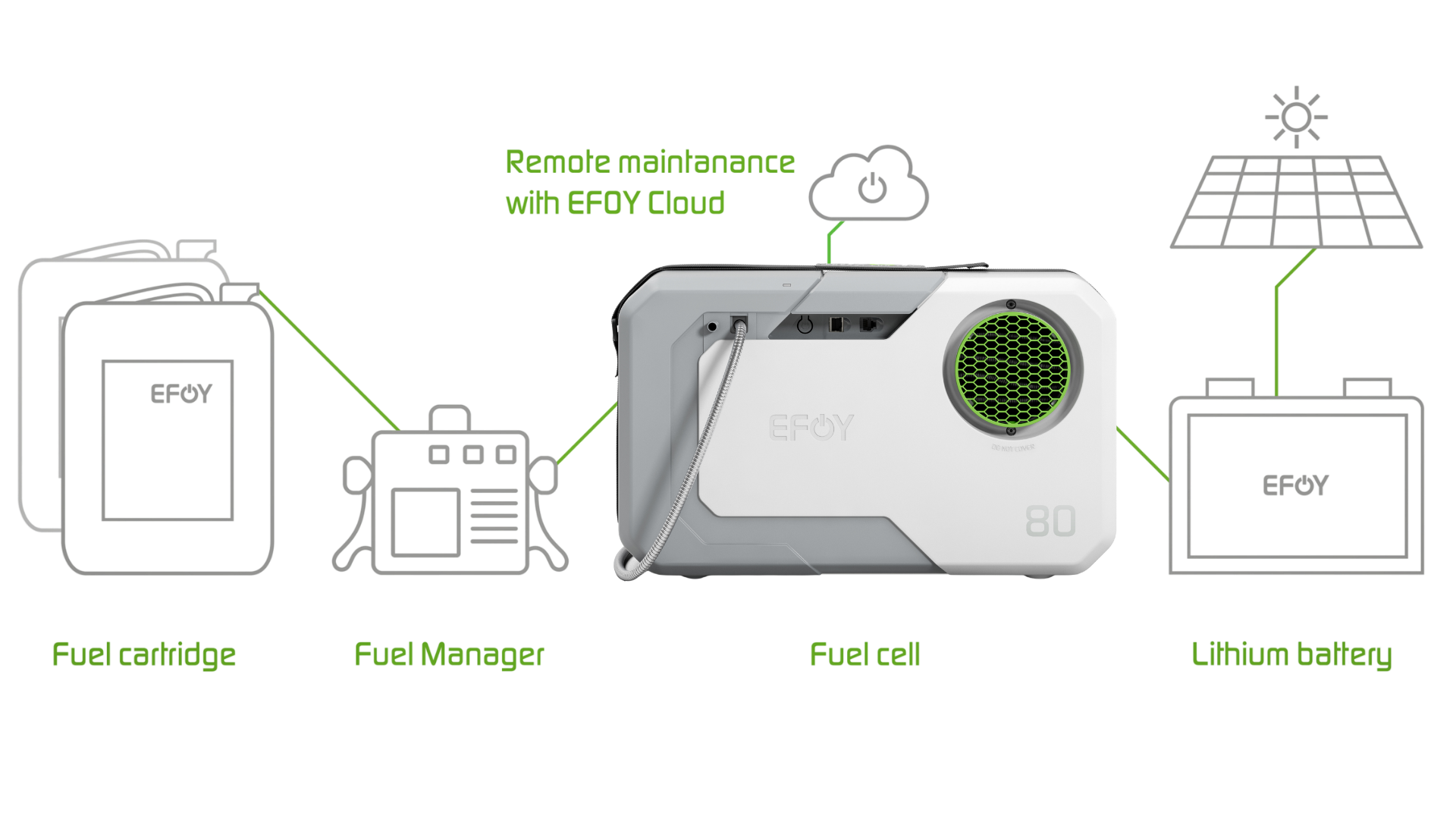
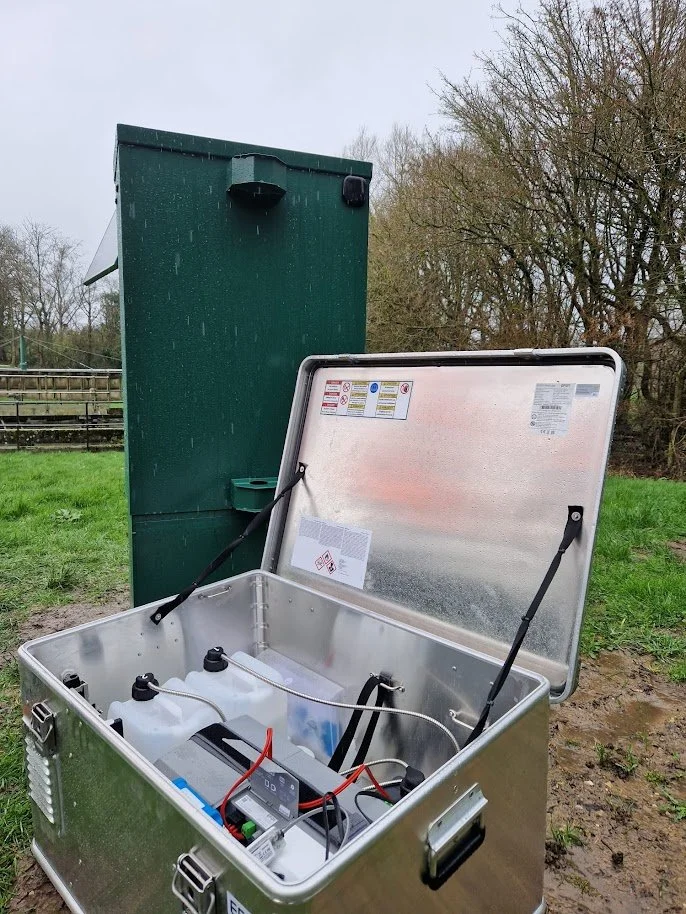
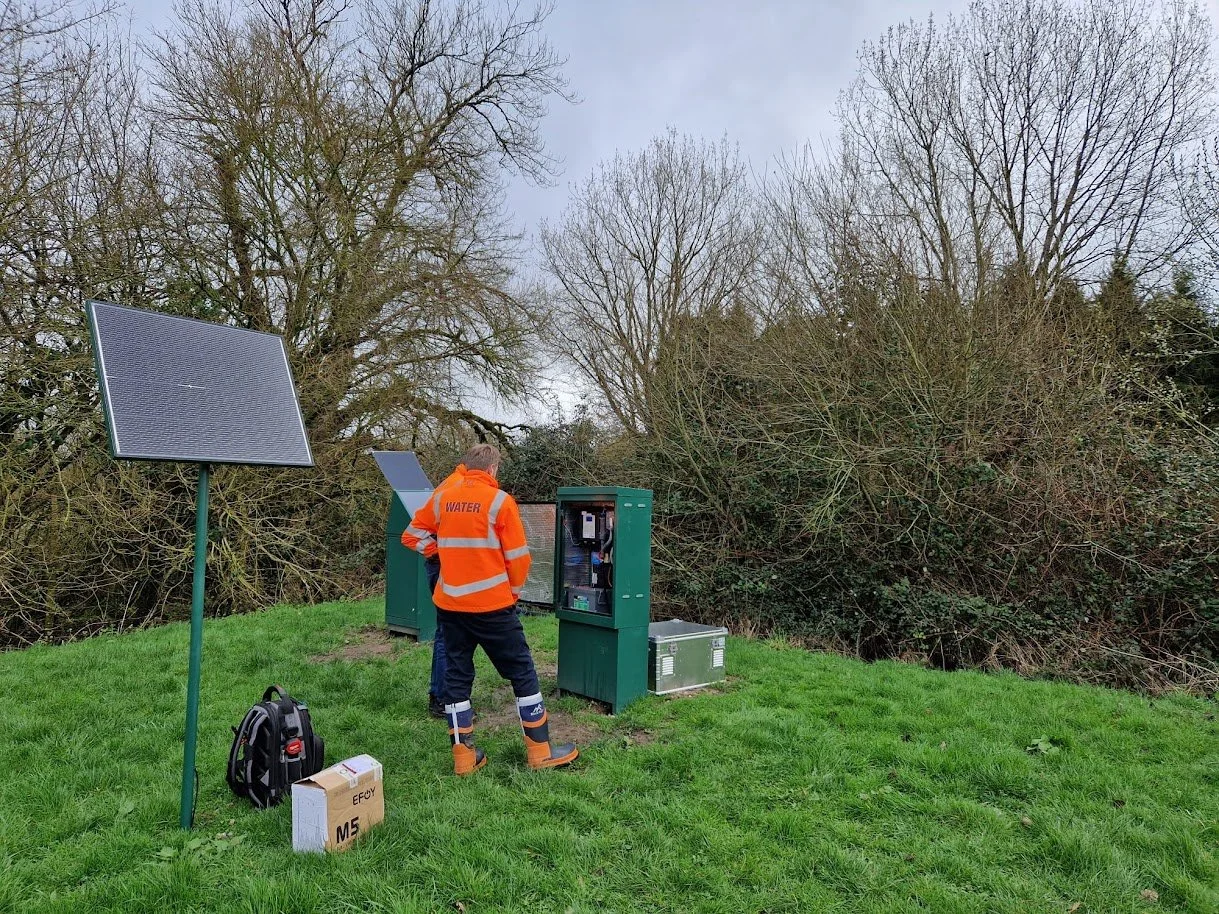
The site was equipped with an EFOY 80 fuel cell, housed within an EFOY ProCube enclosure, alongside a Fuel Manager FM2 connected to two 10 litre methanol fuel cartridges to extend runtime to around 6 months. For the trial deployment, the fuel cell power system was installed externally alongside the monitoring kiosk within the ProCube enclosure. However, for larger-scale rollouts, the fuel cell power supply can also be integrated directly within a larger kiosk cabinet alongside the monitoring equipment.
Installed in conjunction with solar panels, the system forms a hybrid off-grid solution that maximises efficiency. Solar provides power when conditions allow, while the fuel cell automatically supports the system when additional energy is required.
Rather than relying solely on sunlight or stored energy, the fuel cell generates power on demand, ensuring a stable and controlled energy supply. This enables the monitoring kiosk and pump system to operate continuously, regardless of environmental conditions.
How the System Works
The EFOY fuel cell operates as an intelligent power support system, working alongside the battery to maintain a consistent energy supply. The fuel cell automatically monitors battery voltage and generates power on demand when levels drop. It recharges the batteries efficiently before switching off once optimal levels are restored, ensuring a consistent and controlled energy supply. This smart operation avoids unnecessary runtime, reducing fuel consumption and minimising wear on the system.
Key Benefits:
Reliable, consistent power to support continuous monitoring
Fully autonomous operation, reducing the need for site visits
Low noise and minimal emissions, ideal for sensitive environments
Efficient energy use, generating power only when required
Compact and easy to integrate within kiosk-based systems
The system can also be monitored remotely via EFOY Cloud, providing visibility of performance data and alerts, such as low methanol levels, to support proactive maintenance and reduce unplanned site visits.
By combining intelligent control with on-demand generation, the fuel cell provides a dependable and low-maintenance power solution for water monitoring applications.
Deployment
At the Wessex Water site, the CWQM kiosk is now operating as a stable, self-sufficient system, supporting continuous monitoring with minimal intervention. The integrated power solution enables reliable operation of both the monitoring equipment and sampling pump, even in a remote location.
Importantly, the full kiosk and power system can be deployed quickly, typically in under an hour, allowing monitoring infrastructure to be installed and operational with minimal disruption.
Monitoring with Reliable Power
Delivering continuous, high-resolution monitoring at scale requires more than just advanced sensors; it depends on having a power solution that is reliable, repeatable, and easy to deploy across multiple sites.
The combination of kiosk based monitoring with fuel cell power provides:
Consistent and dependable energy supply for continuous operation
Rapid, repeatable deployment across distributed locations
Reduced reliance on site access and maintenance
Remote visibility of power system
This approach supports a more practical and scalable rollout of monitoring infrastructure, particularly in remote or constrained environments.
Conclusion
The Wessex Water deployment demonstrates how combining kiosk based monitoring with a reliable off-grid power solution enables continuous operation in real world conditions, supporting the wider rollout of high-resolution monitoring across the network.