
Providing Live Fuel Prices with VMS by Swarco

SWARCO UK & Ireland Ltd
SWARCO UK & Ireland Ltd delivers smart traffic and transport technology that improves road safety, traffic flow and network performance. The company provides integrated solutions including traffic signal systems, intelligent transport software, monitoring and signage, working in partnership with highway authorities across the UK and Ireland.
The Challenge
SWARCO UK & Ireland Ltd required a reliable off-grid power solution for traffic infrastructure installations where mains power was unavailable. Locations such as the M6 Lancaster Motorway Services northbound fuel price sign were also unsuitable for solar or wind generation due to site constraints and reliability concerns. The challenge was to ensure continuous operation of key low-voltage traffic equipment in remote environments.
The Solution
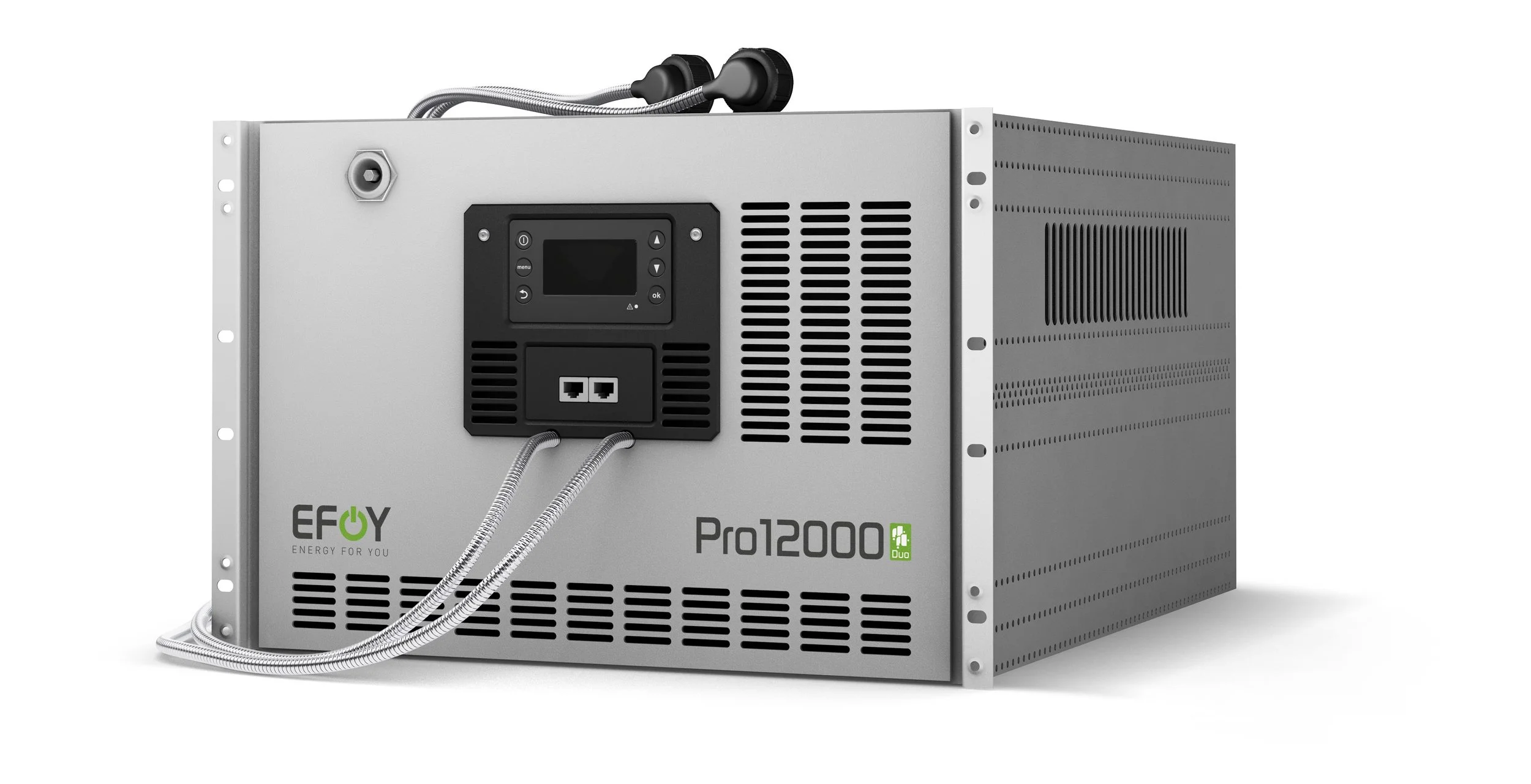
SWARCO selected the EFOY Pro 12000 Fuel Cell, supported by Fuel Cell Systems Ltd, based on previous experience and proven performance. The fuel cell was deployed as a fully autonomous power source, charging a battery system that supplies low-voltage variable message signage (VMS). This solution provides consistent, weather-independent power and is well suited to remote traffic applications.


Result
The EFOY fuel cell delivered reliable, uninterrupted power throughout operation, enabling critical traffic signage to remain fully operational without grid connection. Local technical support and straightforward integration helped SWARCO achieve approval to install the first fuel cell powered equipment on the National Highways network, confirming fuel cells as a dependable off-grid power solution for traffic.
“With the support of Fuel Cell Systems SWARCO gained approval to install the first fuel cell powered equipment on the National Highways network. This was following a thorough review and approval process.”
Paul Calvert, Project Support Manager
How it Works
The EFOY continuously monitors the battery voltage, automatically turning on and off to charge the batteries. A traditional style generator would run continuously. It effectively acts as a ‘battery charger’ ensuring that the batteries are kept within the optimal voltage range. Compared to an internal combustion generator, the EFOY fuel cell has so few moving parts that it has higher levels of reliability and reduced noise levels. The only emissions it produces are tiny amount of carbon dioxide and water.