

Types of Fuel Cell
Direct Methanol Fuel Cell (DMFC)
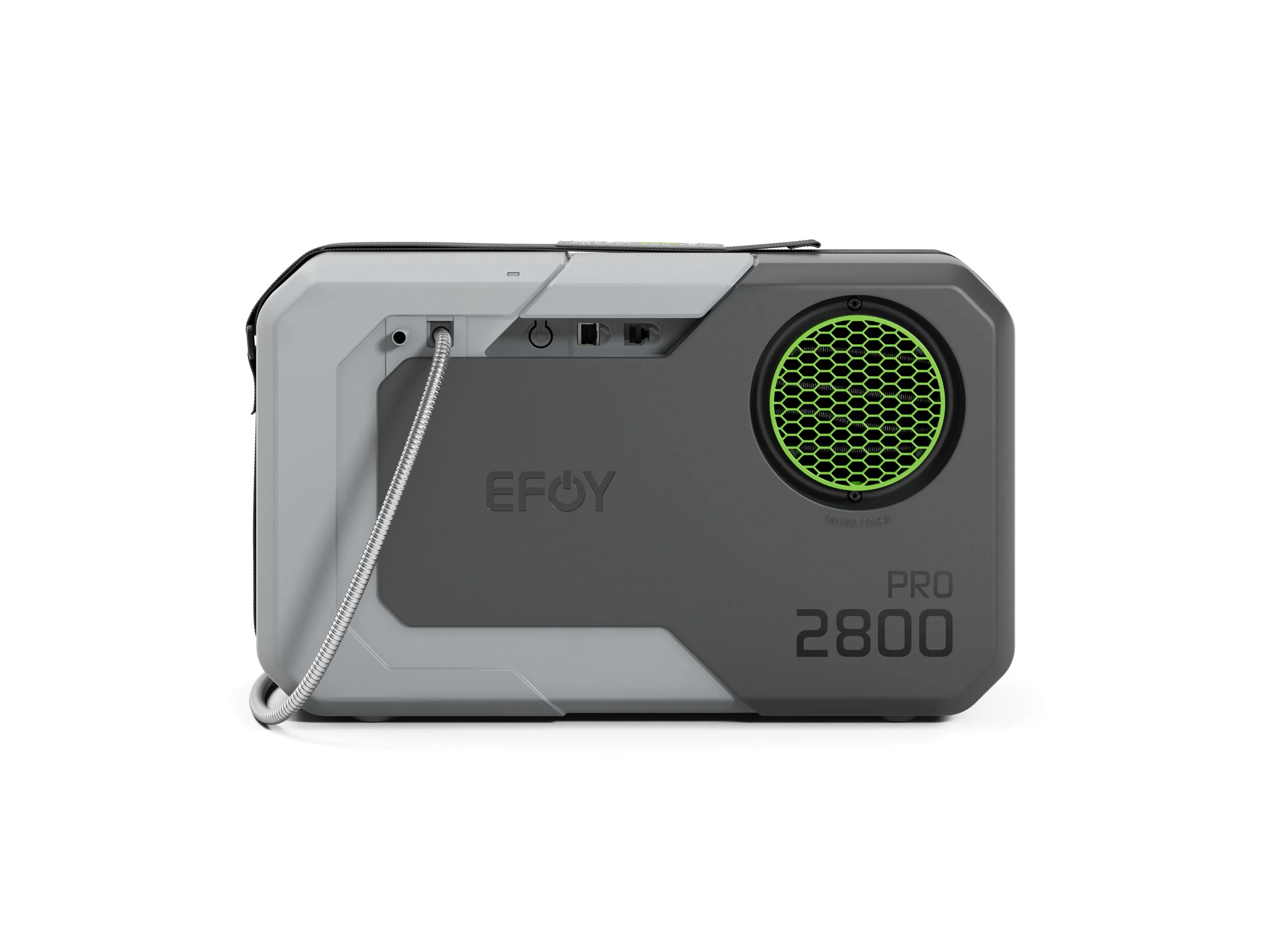
A Direct Methanol Fuel Cell (DMFC) generates electricity by converting liquid methanol and oxygen from the air directly into electrical energy, without combustion or complex intermediate steps. EFOY fuel cells use this technology to provide reliable, fully automatic power for 12 V and 24 V battery systems. An integrated charge controller continuously monitors the battery and automatically recharges it when needed, switching to standby once the battery is full to prevent deep discharge and extend battery life. Methanol is easy to store and handle, and the only by-products of the process are heat, water vapour, and very small amounts of carbon dioxide, making DMFC technology efficient, quiet, low-maintenance, and environmentally friendly.
Fuel Cell Technology
Learn how fuel cell technology works and why it’s an efficient energy solution.
Benefits of Fuel Cells
Understand the environmental and operational benefits of fuel cells.

PEM Fuel Cells
Proton Exchange Membrane Fuel Cells (PEMFCs) use a polymer membrane for its electrolyte and a precious metal, typically platinum, for its catalyst. What distinguishes these fuel cells from others is PEMFC’s ability to operate at cooler temperatures relative to other types of fuel cells, between 80 to 200 degrees Fahrenheit. Pure hydrogen gas is the typical fuel for PEMFCs Due to their use of precious metals and lower operating temperatures. PEMFCs operate between 40% to 60% efficiency and are capable of handling large and sudden shifts in power output. PEMFCs are well-suited for cars and other specialty vehicles such as forklifts that need to quickly start up or accelerate. Additionally, PEMFC’s can be scaled in stationary applications for use in telecommunications, data centres, and residential markets.

Solid Oxide Fuel Cells
SOFCs are the highest temperature fuel cells, operating at about 1800 degrees Fahrenheit. SOFCs use a dense layer of ceramic as an electrolyte, which at high temperatures allows for the conductivity of oxygen ions. Similar to the MCFCs, SOFCs also use a non-platinum catalyst utilizing internal reformation, and are commonly fuelled by natural gas. Through this process, SOFCs can achieve electrical efficiencies of 50% to 60%, and 70%-80% in CHP applications. SOFCs are being used in a range of applications, from small residential auxiliary power units supplying heat and power to homes, to large-scale stationary power generators for larger buildings and businesses.
Reach out to our team today to discuss your project and get guidance on the best fuel cell solution for your needs.